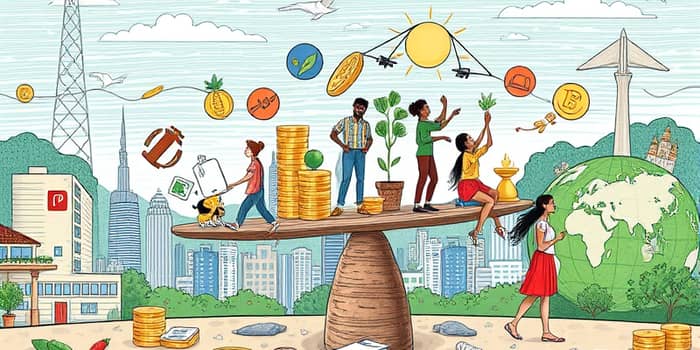
In an era marked by economic uncertainty and shifting consumer priorities, unlocking the full potential of every dollar is more important than ever. By understanding trends, embracing smart strategies, and leveraging cutting-edge tools, both individuals and businesses can thrive without stretching budgets beyond their limits.
Global consumer spending is undergoing a careful recalibration. While overall spending growth is forecasted to rise 2.3% year-over-year in 2025, that rate represents a moderation from the 5.7% growth seen in 2024. U.S. households, in particular, are expected to dial back from 5.7% to 3.7% growth in 2025, with a further slowdown to 2.9% in 2026.
Inflation remains a top concern for 62% of consumers, and half of global shoppers report negative feelings about their economy. Under these pressures, people are reevaluating their spending priorities and looking for ways to stretch their budgets.
Beyond macro trends, spending behaviors are shifting sharply. Discretionary purchases of high-ticket items like garden furniture and home gym equipment have plunged by 48% and 28% since 2021, respectively. Gaming consoles are down 11%, reflecting a broader move toward cost-conscious entertainment.
Conversely, health and wellness priorities are on the rise: prebiotics saw a 15% uptick, while protein-rich food sales climbed 22%. A third of American consumers are actively adopting new habits to improve well-being, blending frugality with self-care.
Gen Z, in particular, cut overall spending by 13% early in 2025 and plans a 23% reduction in holiday expenses. Their focus on core needs—apparel, accessories, and electronics—underscores a pragmatic approach to value.
Today's savvy consumers are turning their focus to value, durability, and authenticity. By shifting toward experiences and services, they discover satisfaction that transcends the fleeting joy of material goods.
Here are practical tips to help you make the most of your budget:
Another effective tactic is bulk purchasing shared essentials. By pooling resources with family or community groups for staples like pantry items and household goods, buyers unlock volume discounts and share storage costs. Similarly, timing major purchases around seasonal sales and rebate programs can yield significant markdowns.
Digital marketplaces offer price-tracking tools and browser extensions that alert you to discount opportunities automatically. Combine those with cash-back credit cards and rebate applications to recapture a portion of every eligible transaction.
Energy and time are resources, too. Adopting energy-efficient appliances or scheduling smart home routines can translate into real savings over time. Even simple behavioral changes, like turning off lights and unplugging devices, can reduce household energy bills by up to 15%.
When planning major expenses—such as home renovations or travel—shop around, compare packages, and tap into loyalty programs or cash-back rewards. These small friction points often add up to big savings at the end of the year.
For organizations seeking to optimize operations, a multifaceted approach is essential. Focusing on both technology-driven efficiencies and strategic resource allocation can unlock significant cost reductions.
Supply chain enhancements remain a cornerstone. Implementing real-time traceability systems can reduce inventory levels by 15–25%, while renegotiating supplier contracts often yields better raw material pricing.
Automation technologies—from specialized SaaS platforms to AI-driven scheduling tools—play a pivotal role in trimming manual labor, reducing errors, and accelerating decision-making. Meanwhile, adopting open-source software solutions can replicate expensive systems at a fraction of the cost.
Successful businesses often adopt a two-pronged approach: optimizing fixed costs while dynamically scaling variable expenditures. For example, energy contracts can shift from fixed-rate to usage-based plans during off-peak periods, aligning costs more closely with production cycles.
Vendor consolidation—reducing the number of suppliers by bundling services under single providers—improves bargaining power. Companies have reported up to 15% cost reductions simply by renegotiating terms focused on volume commitments and longer contract durations.
Lean manufacturing techniques target waste reduction at every stage. By eliminating overproduction, minimizing inventory, and streamlining transportation, businesses achieve faster operations and lower costs without sacrificing product quality.
Streamlining product and service lines also boosts profitability. Companies that prune low-margin offerings and redirect capital into high-demand segments can increase overall margins by up to 10%. This “Pareto principle” in action ensures that 20% of top performers drive 80% of revenues.
Sustainability initiatives further bolster both brand reputation and the bottom line. Switching to digital documentation, recycling materials, and optimizing energy use not only cut expenses by 10–20% but also attract eco-conscious customers.
Unlocking value is more than pinpointing discounts—it’s a comprehensive mindset shift that spans planning, purchasing, and performance. When consumers and businesses alike prioritize long-term value, they cultivate resilience in the face of economic uncertainties.
Budget-conscious consumers can:
Organizations seeking to mirror this proactive stance should conduct regular audits of spending categories, from vendor fees to energy consumption. Engage cross-functional teams to identify redundant processes and challenge assumptions about the way things have always been done.
By nurturing a culture of continuous improvement—where every team member contributes ideas for efficiency gains—companies can sustain momentum and respond nimbly to market shifts.
Ultimately, whether you re balancing a household budget or steering a multinational corporation, maximizing value demands a blend of strategic foresight, practical tools, and a willingness to adapt. When executed thoughtfully, these principles don t just stretch dollars—they unlock new opportunities for growth, connection, and innovation.
In today s complex economic landscape, the most valuable currency is knowledge. Armed with data-driven insights and a commitment to intentional spending, you can transform financial constraints into pathways toward prosperity and purpose.
Now is the moment to reimagine value. By integrating these strategies into everyday decisions, you ll discover that smarter spending and efficient operations are not compromises—they re catalysts for thriving in any economy.
References