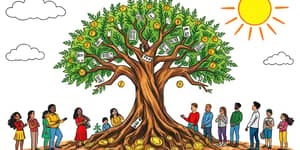
In 2026, consumers find themselves at a crossroads of opportunity and constraint. With incomes divided and costs rising, individuals must learn to stretch every dollar. This article explores how different income groups navigate a nimble adaptation to economic pressures and offers practical guidance for strengthening one’s financial footing.
The term “K-shaped recovery” describes the widening gap in spending between high- and low-income households. While the top third of Americans enjoy robust gains—bolstered by tax cuts, wealth effects, and discretionary splurges—others face tighter budgets, reduced non-essential purchases, and growing debt burdens.
Under the One Big Beautiful Bill Act (OBBBA), households receive an average tax cut of $2,900. However, remarkable spending growth in top quintile segments shows how 60% of benefits flow to those earning above $217,000. This dynamic fuels luxury travel, home improvement projects, and premium-brand experiences.
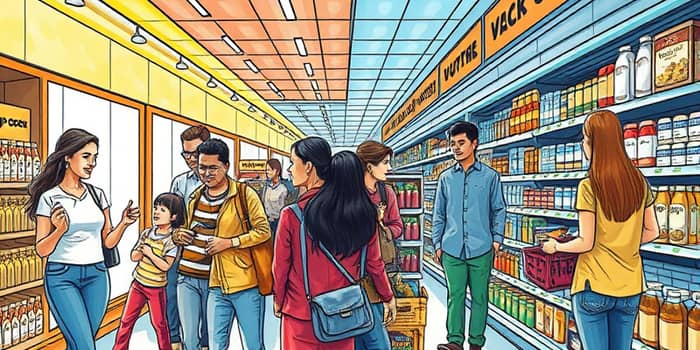
By contrast, nearly 25% of households still live paycheck-to-paycheck. Many adopt value-seeking behaviors like private labels, shop warehouse outlets, and limit restaurant visits to maintain balance. Low-income families cut back on fuel, meat, and non-essentials, demonstrating elite resilience on a more modest scale.
Consumers across the income spectrum deploy a mix of tactics to stretch budgets. From private-label staples to buy-now-pay-later plans, these seasoned coping strategies offer daily relief when essentials cost more.
Private labels accelerate adoption as national brands inflate prices by roughly 6% faster. Shoppers gravitate toward store brands for pantry staples, household goods, and personal care products, without sacrificing quality. Meanwhile, BNPL usage for groceries jumps from 14% to 25% year-over-year, although late payments rise among younger and low-credit users.
Seasonal spending peaks during holidays and summer, offering opportunities for targeted savings. Savvy shoppers can time big purchases—like appliances or travel—for these high-discount windows, improving affordability.
The Great Recession of 2007–2009 provides useful parallels. High-income households cut spending on premium categories to shop warehouse clubs, while generics held steady, not surged. Younger consumers adjusted quickly, but brand loyalty remained surprisingly resilient.
Looking to 2026 and beyond, watch for potential pitfalls: rising BNPL defaults, growing unsecured debt among low-income earners, and persistent geographic spending divides. Macroeconomic shocks—such as tariff hikes or sudden inflation spikes—could reignite sharp cutbacks among value-focused households.
No matter your income bracket, these actionable steps can help you build a more resilient spending plan and capture unexpected opportunities.
Additionally, consider creative income boosts: freelancing, monetizing hobbies, or exploring part-time gig work. These efforts can offset inflation’s toll and deepen your financial cushion.
The 2026 consumer landscape may feel polarized, but it also brims with choice. High-income families can reinvest wealth gains into life-enriching experiences, while others sharpen their budgeting acumen and discover newfound financial agility.
At its core, the “nimble noodle” philosophy celebrates adaptability, resourcefulness, and forward thinking. By combining disciplined money management with selective indulgences, every household can navigate uncertainty and build toward long-term prosperity.
Remember, economic shifts are cyclical. Today’s constraints can seed tomorrow’s breakthroughs—if you stay informed, flexible, and optimistic. Embrace your own path toward stronger financial health and watch how small adjustments yield substantial rewards in the years ahead.
References