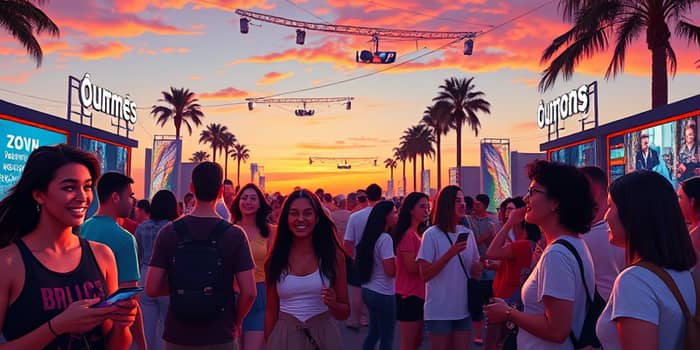
In today’s fast-evolving marketplace, a profound shift is underway. Companies and individuals alike are discovering that immersive engagements yield lasting rewards far beyond traditional material investments. From global brands allocating billions to intimate pop-up activations, experience-driven spending is redefining value and unlocking unprecedented returns.
By exploring market trends, unveiling compelling success stories, and outlining practical strategies, this article offers a roadmap to harnessing the power of experiences for both business growth and personal fulfillment.
The scale of experiential marketing has skyrocketed, with global spending projected to exceed $128.35 billion by 2025. Consumers are following suit. Americans are set to invest a staggering $2.1 trillion on experiences, from adventure travel to intimate music festivals, reflecting the enduring human desire for connection, discovery, and shared moments.
Why this surge? As Millennials and Gen Z lead the way, 78% of these cohorts state they would rather spend on experiences than material goods. This generational pivot is reshaping marketing budgets and prompting Fortune 1000 companies to increase experiential allocations by 74% in 2025.
Experiential campaigns frequently outperform traditional channels. Half of all marketers confirm that live activations deliver superior ROI. But the impact transcends immediate sales.
Investing in customer experience correlates with remarkable financial gains. Companies making moderate CX enhancements saw an average increase of $775 million in revenue over three years. In software, gains reached $1 billion, demonstrating the outsized impact in tech-driven industries.
Repeat business and referrals rise dramatically when brands prioritize memorable interactions. A 70% repeat-customer rate among event attendees illustrates how experiences foster loyalty and create brand ambassadors organically.
Beyond the boardroom, experiences enrich our lives on a human level. Memories that last a lifetime are forged through shared adventures, cultural exploration, and meaningful events. These intangible returns—joy, inspiration, and deeper relationships—cannot be measured in dollars alone, yet they shape our perceptions and drive future choices.
Consider a small start-up hosting a weekend retreat for top customers. By blending product demos with wellness workshops and local cuisine, the brand not only showcased its offerings but created an emotional bond that far outlived the event’s duration.
On a personal scale, families investing in travel often report stronger connections and collective resilience. The act of exploring new places yields stories and traditions that become part of a family’s legacy.
Translating theory into action requires clear planning and resource allocation. Begin by defining objectives: awareness, trial, loyalty, or community building. Next, select the activation formats that align with your goals and audience preferences.
By evaluating each format’s unique benefits and challenges, organizations can craft a balanced mix of activations that maximize engagement and brand resonance.
Technology acts as a force multiplier for experiential strategies. AI adoption among marketers climbed from 50% to 72% in 2024, empowering brands to deliver tailored experiences with AI that anticipate attendee preferences.
Personalization drives results. Companies embracing data-driven customization enjoy double-digit revenue growth, an 8% uplift in conversion, and 1.5× higher loyalty rates compared to peers relying on generic messaging.
Voice technology and augmented reality enrich the multisensory experience. With 81% of consumers now using voice interfaces regularly, integrating smart assistants at events can streamline information delivery and evoke wonder. Meanwhile, AR stations provide hands-on engagement, extending dwell times and amplifying emotional impact.
Reliably quantifying experience ROI demands a blend of traditional and innovative metrics. Monitor dwell time, foot traffic, social shares, lead generation, and post-event purchase behavior. Utilize feedback loops to refine content, timing, and personalization tactics.
Data-driven refinement fosters growth. Track the correlation between touchpoint engagement and revenue milestones. A baseline 85% purchase inclination among experiential attendees can serve as a benchmark, guiding budget adjustments and activation scaling.
Investing in experiences is more than a trend; it’s a strategic imperative. By blending emotional resonance with measurable outcomes, organizations and individuals can cultivate deeper connections, drive sustainable growth, and craft narratives that resonate long after the event lights dim.
Begin by auditing your current spending, defining clear objectives, and piloting one targeted activation. Leverage AI and immersive technologies to personalize every touchpoint. Measure results meticulously and iterate relentlessly. In doing so, you will unlock the full potential of experiences—and reap dividends that extend across financial, emotional, and relational horizons.
References