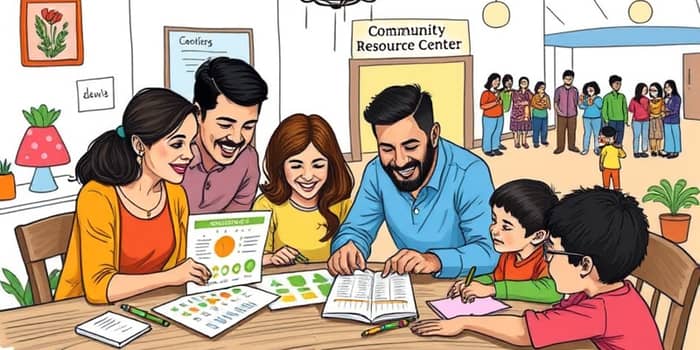
When Sarah Perez stepped into the Moon Mountain Washington Resource Information Center in Phoenix, she carried more than just her toddler’s backpack. She brought determination, hope, and a willingness to learn anew. After leaving her accounting job because childcare costs had consumed most of her paycheck, she found solace in a place that offered a welcoming community hub without adding financial burden. Visiting the center two to three times a week, Sarah discovered structured playgroups, parenting workshops, and friendly faces ready to share wisdom. Over months, her youngest, once shy and silent, began practicing letters and counting in excited bursts. This transformation illustrates how accessing free, high-quality support can foster economic support and family stability while nurturing childhood development.
Across Arizona’s Maricopa, Pima, and Santa Cruz counties, First Things First has invested $9.9 million in 48 Family Resource Centers (FRCs), reaching 21,325 unique parents with 121,316 services in SFY24. These centers operate as more than drop-in sites; they are Family Resource Centers as community hubs where families gain both formal and informal assistance.
At their core, FRCs offer a broad spectrum of programs and support, including social gatherings, educational classes, and referrals to local services. By providing a safe, welcoming environment, these centers empower families to build networks of mutual aid and resilience.
Developed by the Center for the Study of Social Policy two decades ago, the Five Protective Factors offer a research-based guide for strengthening families. In pilot studies, more than half of participating parents saw measurable gains in family functioning and support networks.
By weaving these factors into everyday life, families can build a spirit of collective resilience that buffers against adversity. Community centers reinforce these elements through workshops, peer groups, and personalized coaching.
Effective resource management begins with a clear budget and measurable goals. Many families find the 50/30/20 rule helpful: allocate 50% of after-tax income to essentials, 30% to discretionary spending, and 20% toward savings or debt reduction. Defining practical budgeting and cost-reduction strategies ensures families can meet today’s needs while planning for tomorrow.
Setting SMART goals—Specific, Measurable, Achievable, Realistic, and Time-bound—transforms vague intentions into concrete plans. Tracking methods vary from digital apps to traditional envelope systems, but success hinges on regular review and course correction.
Children learn best by participation. Inviting kids to help distinguish between needs and wants teaches critical thinking and responsibility. Introduce a cash-only allowance system for discretionary spending, and celebrate milestones—like saving for a desired toy—with small family rewards. This hands-on approach not only builds financial literacy but also strengthens bonds as each member contributes to collective goals.
Encourage children to share budgetary ideas at weekly family meetings. Celebrate successes publicly and address setbacks with supportive problem-solving. By modeling transparency and cooperation, parents foster social connections and mutual accountability that reinforce long-term resilience.
Beyond local resource centers, families can tap into larger systems designed to address specific needs. Programs like the Children’s HOME Initiative provide affordable housing coupled with early childhood education and economic coaching for families facing homelessness. The Jeremiah Program offers safe housing and two-generation support to single mothers, combining quality early education with individualized coaching for career advancement.
Emerging efforts, such as First 5 Alameda’s Data for Action initiative, plan to add 2,400 subsidized childcare slots and expand support for Family, Friend, and Neighbor caregivers. Continuous data collection, including surveys by Listen4Good and evaluations funded by Virginia G. Piper Charitable Trust, ensure programs evolve to meet real-world needs.
Sarah Perez’s journey from financial strain to confident parenting underscores the power of community-based resources and a clear framework for resilience. By understanding the role of resource centers, applying the Five Protective Factors, and adopting disciplined budgeting techniques, families across the nation can thrive.
Empowered by knowledge, support, and collaborative spirit, families can transform limited resources into springboards for stability and growth. In this resourceful realm, every tool—whether a robust community network or a simple meal plan—becomes a stepping stone toward lasting well-being.
References