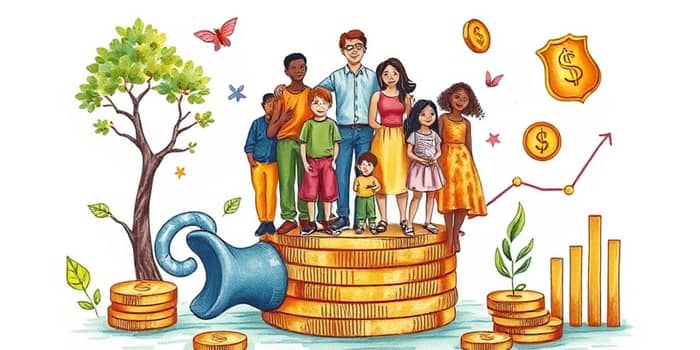
In uncertain times, anchoring your family’s finances becomes an act of love and foresight. By understanding the realities of modern cost pressures and embracing proven strategies, you can cultivate living paycheck-to-paycheck without financial buffers into a future anchored in stability and hope.
Whether you face rising grocery bills or mounting credit card balances, the tools you develop today can shield tomorrow’s dreams. This guide combines data, real-life success stories, and actionable steps to empower every household.
Recent surveys reveal that 67 percent of American workers live paycheck to paycheck, with many lacking reserves for emergencies. Rapid inflation has driven 80 percent of families to worry about food prices, 74 percent about utilities, and 63 percent about gas costs. For those earning middle incomes, 69 percent say their earnings fall behind rising expenses, a sharp increase from 50 percent just five years ago.
The combination of unpredictable income and unexpected costs creates a cycle of stress. Without intervention, families can slip further from their goals and feel overwhelmed by day-to-day choices.
Once seen as a buffer against instability, the middle class now faces its own pressures. Nearly half of all middle-income adults express low confidence in retirement savings, down from earlier highs. Pay-in-full credit card rates have fallen from 44 percent in 2020 to just 29 percent today, while 21 percent report difficulty paying rent or mortgage on time.
Declining retirement confidence and increasing debt create a fragile environment where one misstep can erode years of progress. Pessimism about future finances reached its highest point since 2018, and rising costs continue to challenge hard-earned stability.
Financial resilience can be measured. Only 48 percent of households have enough savings to cover three months of expenses, and half of families with funds over $1,000 tapped them in the past year. The Financial Resilience Index fell 29 points between Q1 2024 and Q1 2025, returning to long-term norms as costs outpaced income and assets.
Access to credit, consistent income growth, and the structure of benefits programs all affect how well families weather shocks. Without deliberate action, the gap between essential costs and available resources will continue to widen.
Creating breathing room is the first step toward lasting security. By establishing a solid emergency fund, reducing expensive debt, and optimizing available supports, households gain the flexibility to pursue new opportunities without fear. These debt reduction and management strategies form the foundation of financial resilience.
These core practices can lift families out of reactive cycles and usher in periods of growth and opportunity. When expenses are planned and resources secured, work and life goals become more attainable.
Across the country, pilot projects demonstrate the transformative power of unconditional support and guided assistance. By complementing individual efforts with community resources, families can build momentum without fear of penalty.
As more households experience relief from constant pressure, new patterns emerge. With family-led and community-based supports in place, individuals report greater confidence in taking on career development or higher education, knowing they have a safety net.
Behavioral science shows that breathing room changes behavior dramatically, enabling choices that lead to long-term growth. Whether it’s saving for retirement, investing in skills, or planning for a home, families with margins find it easier to set and achieve goals.
Your journey toward financial stability begins with a single step: committing to one core practice today. Start by automating a small emergency deposit, seeking out free tax filing services, or meeting with a benefits counselor. These actions, repeated consistently, will become the foundation of your family’s anchor.
By blending practical strategies with compassionate support, every household can transform stress into strength and uncertainty into opportunity. Together, we can build the resilient futures our families deserve.
References