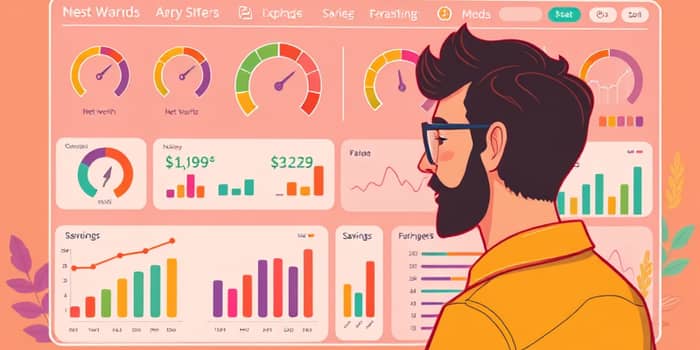
In an era where data drives decisions, understanding your own financial habits can feel overwhelming. The spending scorecard offers a clear, actionable way to evaluate your money management, combining your net worth, expenses, and spending tendencies into one powerful metric. By treating personal finance like a project you measure and refine, you unlock the path to lasting independence.
A spending scorecard functions much like a credit score but focuses on broader financial well-being. It creates a simple metric or checklist that reflects your capacity to cover expenses, build wealth, and maintain healthy habits. Instead of just tracking debt or payments, you gain insight into how your wealth and spending align over time.
At its core, the scorecard answers the question: How many years of expenses can your current net worth support? A positive ratio signifies stability, while a negative or low score exposes areas for improvement. Ultimately, the goal is to reach a level where your investments and assets can fund your lifestyle indefinitely—true financial independence.
The foundational formula to track is the PF Score, or Personal Finance Score: Net Worth ÷ Annual Expenses. For example, if your net worth is $100,000 and you spend $25,000 per year, your PF Score is 4, meaning four years of expenses are covered by existing assets.
To determine net worth, list all assets—savings, investments, property, retirement accounts, even vehicles—and subtract liabilities such as loans, credit card balances, and mortgages. Tools like spreadsheets, Mint.com, or Personal Capital can automate much of this process, giving you an up-to-date snapshot.
While the PF Score reveals expense coverage, other ratios shed light on saving behaviors and risk exposure. Three key measures include:
Tracking these ratios over time helps you spot trend shifts, celebrate progress, and identify leaks in your financial plan. For instance, a rising debt-to-net-worth ratio may prompt debt repayment strategies before risks intensify.
Beyond numerical ratios, a yes/no checklist offers a qualitative health check. Adapted from AICPA and balanced scorecard principles, this tool highlights overlooked areas and drives goal alignment. Each affirmative answer earns a point, revealing strengths and gaps at a glance.
Use this table as a starting point. Refine questions to suit your values—whether prioritizing education, charitable giving, or major purchases. The checklist’s true power lies in sparking conversations with advisors or accountability partners.
Understanding where and why you spend is crucial to sustainable improvement. Begin by categorizing every outflow into fixed, variable, and discretionary buckets. Fixed costs like rent or insurance remain stable, while variable expenses—groceries, utilities—fluctuate. Discretionary spending covers wants and savings contributions.
Review bank statements or app reports over a full year to flag seasonal spikes: holidays, vacations, birthdays. Note psychological triggers too. Paying by cash versus card can dramatically alter transaction sizes, and recurring subscriptions often slip under the radar.
Apply these insights to set realistic budgets, allocate more to savings, and curb impulse buys. For example, limit dining out to a $40 per month cap or shift non-critical purchases onto a secondary debit card for tighter control.
Putting theory into practice requires clear, deliberate actions. Follow these steps to build and maintain your personalized spending scorecard:
By following this structured approach, you transform abstract financial goals into concrete, measurable targets. The act of regularly measuring and adjusting fosters a growth mindset, keeping you engaged and motivated over the long haul.
The spending scorecard is not a one-time exercise but a lifelong companion. As your goals evolve—starting a business, buying a home, funding education—the scorecard adapts, shining a light on new priorities and potential blind spots.
Ultimately, achieving a PF Score of 25 or more signals that your investments can sustainably cover expenses, including ongoing savings. Yet the true victory lies in the confidence and clarity you gain along the way. By embracing measurement, reflection, and deliberate action, you craft a financial narrative defined by resilience, purpose, and independence.
References