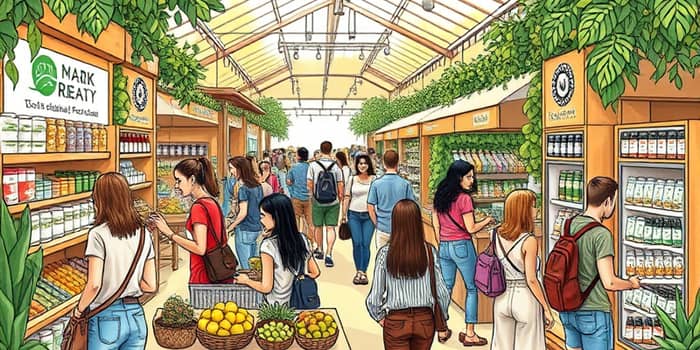
In a world of rising costs and shifting values, consumers are finding strength in intention. The age of impulsive purchases is giving way to a new era of intentional, value-driven choices that honor both personal well-being and the planet.
"The Mindful Marketplace" is more than a trend—it’s a movement reshaping how we shop, spend, and live in 2026. By aligning purchases with values, health, and sustainability, we can navigate economic pressures while fostering resilience.
The core of this approach lies in recognizing four key drivers: economic pressures, health redefinition, sustainability as a baseline expectation, and tech-enabled personalization. Consumers confront rising prices—37% cite inflation as their top concern—while seeking emotional reassurance and simple solutions amid daily stress.
Rather than succumbing to anxiety, mindful buyers embrace strategies that balance cost, quality, and impact. This paradigm shift has given rise to a bifurcated economy: higher-income households increase base spending by 6% over 2019, while lower-income budgets contract.
In today’s marketplace, affordable choices coexist with premium values. More than 60% of consumers prioritize price, yet over 40% are willing to pay extra for brands that reflect their beliefs. Younger shoppers, in particular, gravitate toward private labels for their transparent pricing and quality.
Brands that thrive are those mastering digital loyalty programs, timely promotions, and tiered pricing that reward repeat purchases. By focusing on penetration and purchase frequency rather than per-trip spend, companies can capture market share and build trust.
Wellness is no longer confined to gyms and diets; it’s a holistic journey spanning physical, mental, and emotional realms. From clean-label food and GLP-1 compatible options to mindfulness apps and wearable tech, consumers pursue balanced health supported by innovation.
Wearable devices like WHOOP deliver real-time recovery insights, empowering users to refine sleep, movement, and stress management. Meanwhile, food brands emphasize transparency, clean ingredients, and portion control to align with longevity goals.
Half of today’s shoppers seek products that echo their unique identity. Hyper-personalization has evolved from tailored ads into customizable goods and bespoke experiences. Ferrero’s Nutella jars, embossed with individual names, exemplify how brands honor human pride and creativity.
At the same time, immersive digital platforms by companies like Aesop transform the purchase journey into a personalized narrative, forging deeper connections between consumer and brand.
Environmental stewardship is now non-negotiable. Seventy-two percent of consumers intentionally purchase sustainably sourced or eco-friendly products. Companies like IKEA aim to be climate positive by 2030, while Patagonia allocates 1% of sales to repair and donation programs.
This values alignment drives mindful spending—1 in 5 shoppers change behaviors to avoid retailers whose practices conflict with their beliefs. Voting with dollars has become one of the most powerful forms of modern activism.
As online commerce grows, the lines between shopping and social engagement blur. By 2026, social commerce will account for 17% of online sales, and livestream shopping in the U.S. is projected to reach $70 billion. Influencers host real-time events where viewers can buy directly, fostering community-driven retail experiences.
Nearly 2.6 billion digital grocery and fast-food shopping trips occur annually, reflecting a 2-percentage-point rise in online share. Brands that integrate social features and seamless checkout processes are capturing new audiences.
In uncertain times, consumers crave comfort and simplicity. Experiences—from curated retreats to local art workshops—outpace physical goods in growth. Airbnb’s 491 million nights and $82 billion revenue underscore the shift toward memories over material possessions.
Hyper-blanding trends emphasize calm, neutral design and understated messaging, offering visual relief amid information overload. Products and services that foster a sense of calm—think artisanal teas, guided meditations, and minimalist home goods—thrive in this environment.
Transform intention into action with these strategies:
By tracking purchases and reflecting on satisfaction levels, you cultivate an ongoing loop of awareness and improvement.
As we advance, brands that succeed will prioritize agility, empathy, and purpose-driven innovation. Shared economies, such as rental and repair services, will continue to flourish. Technology will deepen personalization without compromising privacy.
Ultimately, the mindful marketplace isn’t just about what we buy—it’s about who we become through our choices. By harmonizing economic realities with wellness, authenticity, and ethical values, every purchase can be a step toward a more resilient, joyful life.
References