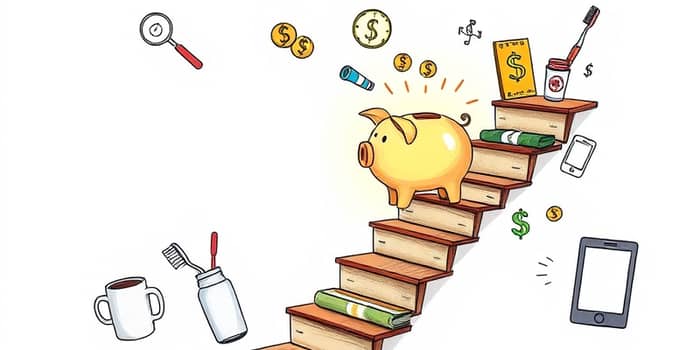
Discover how simple habit pairs can transform your financial life, making progress almost effortless.
Habit stacking involves linking a new behavior to an existing routine, creating a seamless sequence that your brain can follow without friction. This concept is rooted in the idea of leveraging brain efficiency for repetition, so you don’t have to reinvent your schedule.
Developed by BJ Fogg in his Tiny Habits program and further popularized by James Clear in Atomic Habits, this approach uses the four-stage model of habit formation: cue, craving, response, and reward. By anchoring your new action to a solid cue, you strengthen neural pathways, gradually automating the behavior until it feels like second nature.
True financial success is rarely a result of luck; it emerges from intentional, repeated behaviors that align with your goals. Habit stacking minimizes decision fatigue by reducing the number of choices you make each day, so you conserve mental energy for more important tasks.
By pairing dreaded financial chores—such as budgeting or bill paying—with enjoyable, established routines, you maintain consistency without having to carve out extra time. This method also helps avoid projection bias, where you overestimate your future self’s motivation. Instead, you start small, build momentum, and watch your financial health improve naturally.
Follow these concrete steps to integrate financial habits into your daily life:
Commit to your chosen stacks for at least 60 to 66 days—that’s the average time it takes for new behaviors to become automatic. If you miss a day, simply resume the next one without guilt.
The human brain excels at conserving energy. Once a behavior is repeated, neural connections fire more efficiently, making the action feel effortless. Habit stacking strengthens neural connections via repetition, embedding new financial actions into your daily life.
Research on implementation intentions shows that specifying when and where you’ll act increases follow-through by up to 300%. In financial contexts, this translates to consistent savings, timely bill payment, and proactive budget reviews—outcomes that compound over time.
Beyond personal finance, habit stacking can boost productivity and well-being. Leaders can stack quick inbox reviews to maintain responsiveness, while creative professionals might pair brainstorming with daily walks. The key is to attach behaviors to reliable cues and maintain simplicity.
Once you’ve mastered a few initial stacks, you can build chains—linking three or more habits in sequence. For example: wake up → make bed → brew coffee → check balance → transfer to savings. This approach creates momentum that carries you from morning to evening with minimal decision-making.
Be patient and flexible. If a new chain feels overwhelming, break it into smaller segments or swap cues for stronger ones. Regularly review your stacks every few weeks to ensure they align with evolving goals and circumstances.
By integrating these strategies, you transform mundane routines into powerful levers for financial growth. Over time, small actions accumulate into significant wealth-building progress.
Embrace the harmony of routine and intention, and watch how these stacked habits can transform your financial future with minimal effort and lasting impact.
References