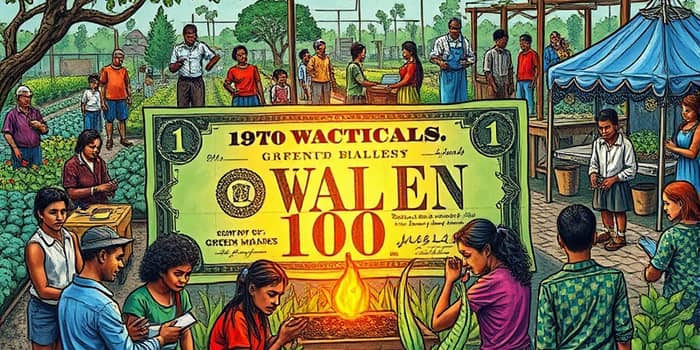
In times of conflict and uncertainty, the greenback emerged as a symbol of ingenuity and resilience. When Congress authorized the first paper money in 1862, it unleashed a financial revolution that redefined value, trust, and sovereignty. More than a Civil War expedient, the greenback era laid the foundations for modern fiscal innovation.
The subtitle “Habits for Perpetual Prosperity” reflects a timeless truth: wealth generation and maintenance depend on consistent, intentional actions. By tracing the greenback’s journey from wartime necessity to a beacon of collective empowerment, we draw lessons that resonate deeply with today’s economic challenges.
As you explore this article, imagine yourself as both steward and architect of your financial destiny. Through a tapestry of history and practical counsel, discover how to cultivate habits that endure, even as markets shift and priorities evolve.
The introduction of greenbacks challenged the prevailing gold standard by allowing a government-issued currency without commodity backing. These notes, printed with green ink on their reverse, became legal tender across the Union, compelling merchants, soldiers, and citizens to accept them as equivalent to gold coins.
Yet the path was fraught with tension. By the end of the Civil War, a dollar greenback purchased barely half the goods it had in 1862. Inflation soared, then contracted dramatically after the Resumption Act of 1875 restored gold convertibility. Americans experienced firsthand the birth pangs of modern monetary policy.
Beyond economic theory, the greenback conflict ignited philosophical debates. Advocates invoked producerism, arguing that currency should represent labor rather than precious metals. Opponents warned that unbacked money would erode trust and harm international standing. These dual narratives underpin many contemporary finance dialogues.
At the heart of the greenback philosophy lay a drive to wrest monetary control from centralized banks. Today, cultivating financial sovereignty means building a personal and household economy that relies on your choices, not external whims.
Start by creating a transparent budget system. Track every expense—groceries, utilities, subscriptions—to identify leakages. Establish automated savings that funnel a percentage of each paycheck into designated accounts for short-term goals, long-term investments, and charitable giving.
Through these steps, you forge a self-reliant framework that can adapt to career shifts and market turbulence, fulfilling the greenback promise of limitless potential through disciplined habits.
Although uncontrolled inflation can be damaging, strategic use of inflation can build equity. Reflect on historical greenback value swings: they taught Americans to guard purchasing power vigilantly.
Implement a three-pronged approach. First, scrutinize your budget quarterly, cancel unused services, and renegotiate essential contracts. Second, channel a portion of savings into assets that historically outpace inflation, such as inflation-protected securities, real estate, or select commodities. Third, pursue professional growth—ask for raises, upskill, or pivot toward industries with rising demand.
These measures ensure your purchasing power endures across cycles and economic swings.
Greenback proponents championed the idea that true money stems from productive labor. In a modern context, embrace this ethos by consistently enhancing your skills and delivering tangible value.
Enroll in online courses or local workshops that sharpen professional capabilities. Volunteer your expertise to nonprofit initiatives or startup collaborations. Write, speak, or mentor in your domain to solidify your reputation as a value creator.
By aligning efforts with visible outcomes, you honor the spirit that money should reflect genuine work and innovation, reinforcing safeguard against unpredictable economic shifts.
The Greenback Labor Party demonstrated that collective action amplifies individual efforts. Farmers, laborers, and small-business owners united to influence policy and establish credit unions, cooperatives, and local currencies.
Channel this collaborative energy today by engaging in community financial initiatives. Attend town hall budgeting workshops, contribute to crowdfunding campaigns for local enterprises, or create cooperative savings groups where members pool resources to fund business startups or communal land projects.
When individuals band together, they weave a safety net that transcends personal assets. This networked resilience is a powerful antidote to the isolation often felt in volatile markets.
The saga of the greenback teaches us that the foundations of enduring prosperity are not built on chance, but on choice—choice to govern our finances, to infuse our work with purpose, and to build alliances that uplift others. Whether facing inflationary tides or deflationary pressures, we can guide our destinies through intentional habits and collaborative vision. By integrating long-term wealth creation strategies from the greenback era, you ensure a stable and flourishing future.
Begin by drafting a personal prosperity manifesto that outlines your core financial values, from sovereignty to service. Revisit it quarterly, adjusting strategies while preserving overarching principles. As you do so, you’ll craft a legacy of abundance that spans generations and mirrors the transformative power of the greenback era.
Embrace this heritage, and let each greenback-inspired habit propel you toward not just wealth, but holistic prosperity—for yourself, your loved ones, and your community.
References