Generosity isn’t just an act of kindness—it’s a catalyst for expanding wealth across multiple dimensions. By understanding the mechanisms that multiply the impact of giving, we can transform individual donations into waves of change that enrich societies and uplift communities.
At the heart of effective philanthropy lies the concept of financial multipliers in effective giving. Platforms like Giving Multiplier invite donors to split their gifts between personal favorites and highly vetted charities, boosting each dollar with a matching pool. Between September 2020 and December 2023, this approach generated an average net multiplier of 5.4x conservative to 18x optimistic—meaning every operational dollar moved up to 18 times its value to high-impact causes.
Beyond gross movement of funds, the three-factor model refines impact estimates. It multiplies total donations by a labor factor and a quality factor to calculate counterfactual revenue, adjusting for opportunity costs and recipient efficiency. In 2024, marginal multipliers ranged from 0.32x conservative to 34x optimistic, reflecting experimental uncertainty but highlighting potential upside.
Fundraising levers amplify these effects further. Matching grants driven by corporate partners or board challenges can double or triple contributions. Cost efficiencies—like a $10 donation purchasing $60 worth of retail food—unlock disproportionate benefits. Even a single well-drilled well can deliver sometimes outsized returns in money moved through improved health, productivity, and schooling.
Generosity doesn’t stop at the transaction. It propagates through social networks and psychological triggers, creating self-reinforcing cycles of giving and gratitude.
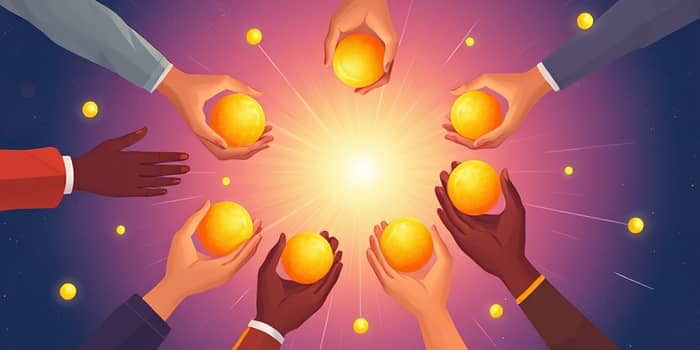
Research shows that witnessing someone else give often triggers even more giving than receiving help oneself. This social contagion effect ensures that one act of generosity can inspire dozens more, embedding philanthropy into community culture.
When generosity meets strategic design, the ripples extend into broader economic systems, creating sustainable growth and opportunity.
These examples demonstrate how a single donation can translate into improved nutrition, health outcomes, job creation, and lifelong learning. By building teams of organizational multipliers, nonprofits amplify each resource, ensuring every dollar catalyzes exponential outcomes.
Even spiritual traditions recognize this pattern. Biblical accounts of the loaves and fishes or communal healing illustrate archetypal generosity multipliers, reinforcing the timeless truth that giving unlocks abundant return.
A robust Theory of Change (ToC) underpins multipliers. For platforms like Giving Multiplier, the key assumption is that introducing donors to high-impact organizations yields net additional donations. While tracked data on platform gifts offers strength, challenges remain in measuring counterfactuals and adjusting for self-reporting biases.
To enhance validity, evaluators recommend segmenting donors by behavior, tracking recurring gifts over time, and assessing externalities. When funders operate as a single agent aiming to maximize adjusted returns, prioritizing cost-effectiveness ensures resources flow where they generate the highest ripple effects.
Translating multiplier theory into action requires clear communication and strategic appeals. Here are proven tactics to mobilize resources and ignite generosity:
Regardless of whether a match is 2x or 4x, response rates remain remarkably consistent. Presenting clear comparisons—such as a $20,000 gift translating into $180,000 value at a 6x multiplier—energizes supporters and builds momentum.
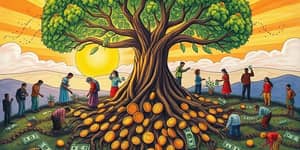
By embracing the principles of impact leverage through strategic giving, donors and organizations can create cascading benefits that extend far beyond initial contributions. Each act of generosity becomes a seed that blossoms into health, opportunity, and community resilience.
As more people recognize that generosity is itself a resource multiplier, we can cultivate a culture of abundance—one where every gift, small or large, multiplies across social networks and economic systems. When we give with intention and leverage proven mechanisms, our collective richness knows no bounds.
References