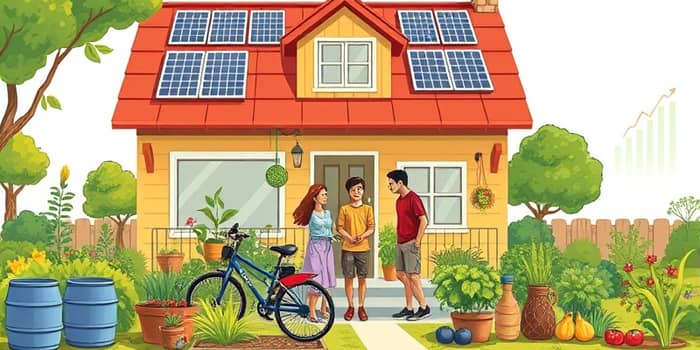
In a time of rising costs and environmental challenges, the path to financial security and planetary health can be intertwined. By adopting eco-friendly habits, families not only contribute to a cleaner planet but also reduce household expenses through sustainable practices.
This article explores how the Economic Policy Institute’s family budget components, recent Bureau of Labor Statistics spending trends, and state-level fiscal models can inspire a practical, green budgeting approach for 2026 and beyond.
The Economic Policy Institute (EPI) calculates the income needed for families to maintain a modest, adequate living standard across seven core categories. These components capture real-world costs more accurately than federal poverty measures and provide a framework for targeted savings:
Complementing this, the Bureau of Labor Statistics (BLS) reported 2024 average annual spending for U.S. consumer units at over $61,000. Certain categories, such as dining out and excess driving, present clear opportunities for families to trim costs while consciously reducing their carbon footprint.
Some states have managed to keep per-family government costs low, serving as models for both fiscal prudence and an ethos of minimal environmental impact. According to Americans for Tax Reform data on savings per family from 2015 to 2024, these “fiscal champions” demonstrate how disciplined budgeting at a large scale can inform household strategies:
By understanding how these states balance essential services with spending discipline, families can emulate policies like spending caps and automated reserves to stabilize their own budgets.
Linking eco-habits directly to each budget category transforms abstract goals into actionable steps. Consider these strategies to start immediately:
Each change not only cuts costs but fosters a culture of mindful consumption that resonates with children and extended family.
Creating enduring financial habits requires clear visibility and automation. Begin by tracking three months of all expenses, from mortgage or rent to grocery store receipts. With this data, you can separate needs from wants, set realistic targets, and designate automatic transfers to savings.
Start each paycheck by moving a fixed amount—ideally 10%—into a “green cushion” account. This reserve can cover incremental investments in renewable upgrades, such as solar panels or a heat-pump water heater. When state or federal incentives are available, your eco-savings buffer allows you to act quickly and efficiently.
Remember: small, consistent actions compound. By prioritizing necessity spending and limiting impulse purchases, families can keep budgets on track and invest in green technologies that pay off in months, not years.
Embracing an eco-friendly budget is more than a series of cost-cutting moves—it’s a holistic shift toward resilience, community, and environmental stewardship. By leveraging EPI’s seven spending categories, BLS data on consumer habits, and the example set by fiscally conservative states, families can craft a budget that aligns their financial goals with the health of the planet.
Action today means cleaner air tomorrow, lower bills next month, and an enduring legacy of sustainability for future generations. Start small, stay consistent, and watch both your savings and your positive impact grow.
References