Introducing a thoughtful allowance program at home can transform small coins into foundation for healthy money habits. By guiding children through simple budgeting exercises, parents set the stage for lifelong financial confidence.
Children as young as five or six begin to understand that money isn’t just paper or coins—it’s the means to achieve goals, trade for goods, and help others. When parents introduce an allowance at this age, they foster delayed gratification and goal-setting, empowering kids to save up for toys, outings, or charitable giving.
Evidence shows that by age seven, financial habits begin to solidify. An allowance program provides a rich opportunity for real-world application in everyday life, using tangible experiences rather than abstract lectures. These early lessons become the cornerstone of responsible decisions.
No single formula fits every family. Parents choose from various models—fixed, earned, hybrid, or needs-based. Each approach brings its own lessons and challenges. By setting clear expectations, families can avoid misunderstandings and reinforce trust.
Guidelines help parents set age-appropriate sums. Adjust according to household budget and expected expenses. Below is a typical framework to start the conversation:
Some parents calculate $1–2 per year of age, then adjust based on responsibilities and family values. The key is consistency and fairness.
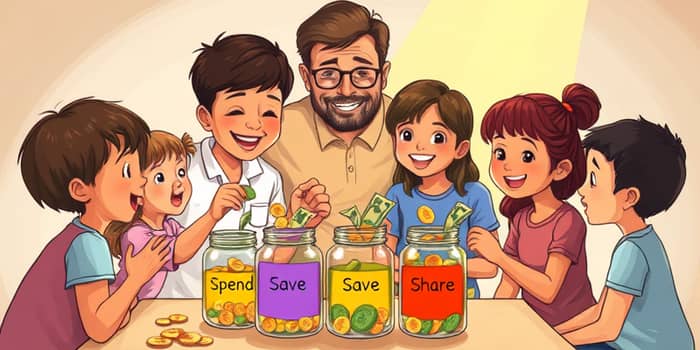
Introducing the three-jar system channels funds into distinct purposes. Children decide how much goes into each jar, witnessing the value of division and modeling responsible financial behaviors.
Spend Jar: Funds for small treats, games, or outings. Save Jar: Longer-term goals such as a new bike or video game console. Share Jar: Donations to a favorite charity or gifts for loved ones.
Parents can gradually introduce percentage splits—10% to share, 20% to save, 70% to spend—as children mature. Transitioning to bank accounts with auto-transfers teaches digital tracking and interest concepts, reinforcing a solid foundation for future finances.
An allowance isn’t just a payment; it’s an invitation to dialogue. Nearly half of parents discuss money weekly, turning everyday trips to the grocery store into lessons on budgeting, comparing prices, and prioritizing needs over wants.
Use teachable moments: involve children in shopping lists, compare unit prices on cereal boxes, or review bank statements together. Tracking goals with charts or apps keeps momentum high and encourages children to celebrate each milestone.
Consistent allowance practices cultivate skills that extend far beyond childhood. Budgeting for a $100 skateboard over ten weeks teaches patience, planning, and self-control. When young adults encounter credit cards and loans, they draw on the confidence developed through childhood allowances.
Financial research indicates that habits formed before age seven can reduce the risk of adult debt. By normalizing money conversations and embedding responsibility early, parents help children thrive in a complex economic world.
Even the best plans encounter bumps. Inconsistent payments, overspending, or unclear rules can undermine lessons. Parents can address these challenges head-on:
By creating an allowance framework tailored to your family’s values, you deliver more than money—you provide real-world application in everyday life that sparks curiosity, responsibility, and compassion. Start today, adjust as you learn, and watch your children grow into confident stewards of their financial futures.
References