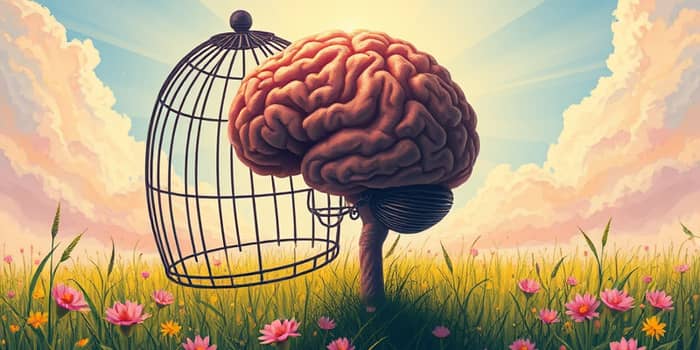
Imagine a world where every decision is tinged with fear, and every opportunity feels just out of reach.
This is the reality for many trapped in a pervasive belief in limited resources, a cognitive pattern that can limit potential and happiness.
Research shows that this mindset isn't just about lacking resources; it's about perception shaping your reality strongly.
Even with ample means, the belief in scarcity can take hold and dictate your life.
A scarcity mindset is characterized by the constant feeling that there is never enough.
Whether it's money, time, love, or opportunities, this perspective creates a deficit mentality.
The concept was developed by researchers Eldar Shafir and Sendhil Mullainathan.
They found that objective reality is less important than perception in driving this mindset.
When people perceive a shortage, it triggers stress and anxiety, leading to a cascade of negative effects.
Key signs that you might be operating from scarcity include:
Scarcity consumes what is known as mental bandwidth depletion reduces efficiency.
This is the brain's finite capacity for attention, cognition, and self-control.
When depleted, cognitive functions like memory and decision-making suffer significantly.
A critical phenomenon is tunneling focuses on immediate concerns, where the mind fixates on the scarce resource.
This leaves little mental space for other important matters, reinforcing the cycle of scarcity.
The emotional and behavioral consequences are profound and include:
Studies have shown that scarcity mindset reduces empathic responses to others' pain.
This effect is not just subjective; it has neural correlates that confirm the dampening of empathy.
In experimental settings, individuals in scarcity reported lower pain intensity for others.
Their brain responses were also diminished in key empathy processing stages.
Evidence from research includes:
Scarcity can manifest in various aspects of life, from time management to financial decisions.
For example, when facing tight deadlines, time scarcity might increase focus but lead to neglect of other responsibilities.
Financial scarcity has been observed to cause more mistakes and poor choices across different populations.
The cascading effects include increased jealousy, stress, and competition.
The mind becomes captive to the scarce resource, imposing ongoing cognitive deficits.
Examples of how this plays out daily:
An abundance mindset is the belief that resources are sufficient and available.
It fosters positive emotions, greater empathy, and improved decision-making.
Research contrasts it with scarcity, showing significant differences in psychological and emotional states.
To illustrate, here is a comparison based on key findings:
This table highlights how scarcity numbs emotional responses in scarcity, while abundance enhances emotional engagement.
Embracing abundance can lead to enhanced emotional engagement in abundance mindset and better life outcomes.
Overcoming a scarcity mindset begins with awareness and a willingness to change.
Recognize the patterns in your thinking and acknowledge that shift is possible.
Practices like gratitude can help refocus your mind on what you have, rather than what you lack.
By doing so, you start to rewire your cognitive patterns for abundance and open up to new possibilities.
Practical strategies to cultivate an abundance mindset include:
Remember, the journey from scarcity to abundance is a gradual process.
Each step you take reinforces a new narrative of sufficiency and possibility.
By shifting your mindset, you not only improve your own life but also enhance your relationships and contributions to the world.
Start today by identifying one area where you feel scarcity and challenge that belief with evidence of abundance.
Surround yourself with positive influences that reinforce an abundant perspective.
Over time, this shift can lead to reduced stress, improved decision-making, and deeper connections with others.
Embrace the power of an abundant mind to transform your reality and inspire those around you.
References