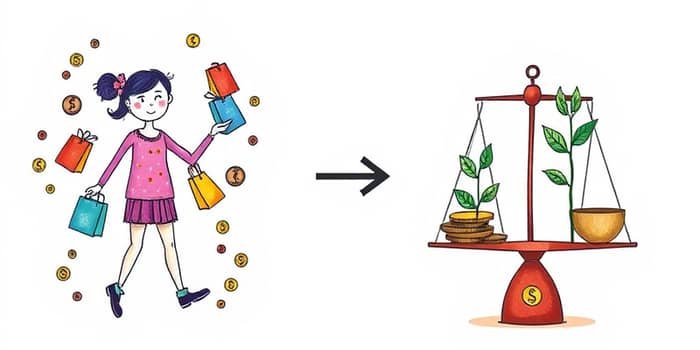
As we navigate 2026, the pervasive financial stress affecting millions demands a shift in how we approach money.
This journey is not just about saving more; it's a profound evolution from fleeting desires to enduring prudence.
With 55% of Americans feeling overwhelmed, embracing this change starts with understanding the landscape and taking actionable steps.
Recent data reveals a surge in financial resolutions, driven by economic challenges and personal setbacks.
In 2026, 64% of Americans plan financial resolutions, up from 56% in 2025.
Top goals include saving more money, paying down debt, and spending less.
Stress sources are diverse, affecting daily life and long-term security.
Moreover, 72% experienced a financial setback in 2025, with 20% facing unexpected emergencies.
This highlights the urgent need for resilience and proactive planning.
Despite inflation and volatility, consumers show remarkable adaptability in their spending habits.
Resilient consumers focus on experiences like travel and entertainment, prioritizing joy over material goods.
Trends from 2025 continue to shape behaviors in 2026.
Short-term focus dominates, as many prioritize immediate stability over long-term goals.
This shift is driven by recent setbacks and rising prices, making mindfulness essential.
Transforming spending habits requires a structured approach to avoid overwhelm.
Begin by defining your future self through reflection on values and goals.
Write a detailed description of your desired financial habits and daily routine.
Break down large goals into micro-steps to make progress manageable.
Develop an action plan with consistent small steps, such as daily tracking or learning from podcasts.
Build new habits by replacing old routines, focusing on consistency over perfection.
Prioritize an emergency fund, as 31% of adults cannot cover a $500 unforeseen expense.
Moving from want to wisdom involves aligning your mindset with long-term aspirations.
Visualize your future self to positively impact financial decisions and reduce stress.
Overcome overwhelm by taking phased actions, turning anxiety into optimism.
From the 55% who feel overwhelmed, many find hope through resolutions like budgeting.
Embrace habits from 2025, such as calculated indulgences and open financial talks.
This psychological shift empowers you to replace impulsive spending with mindful habits.
Implementing practical tools can solidify your financial transformation journey.
Start by tracking and budgeting first to fully understand income and expenses.
Use automation to build consistent habits, like daily expense logging or automated savings.
Adopt a finance transformation roadmap adapted from business principles.
Integrate 2026 trends, such as AI for automation and predictive analytics.
These tools can enhance literacy and streamline financial management.
Looking ahead, leveraging emerging trends can amplify your financial wisdom.
Economic backdrop influences resolutions with inflation and market volatility driving action.
Generational nuances show that younger groups, like Millennials and Gen Z, are most overwhelmed.
Older adults prioritize debt payoff as a top goal with age.
Focus on short-term resilience while keeping long-term aspirations in sight.
Use optimism drivers, like feeling better compared to past years, to stay motivated.
Engage with community through challenges or social media for support and accountability.
Ultimately, transforming spending habits is a continuous journey of growth and adaptation.
By shifting from want to wisdom, you can build a secure and fulfilling financial future.
References