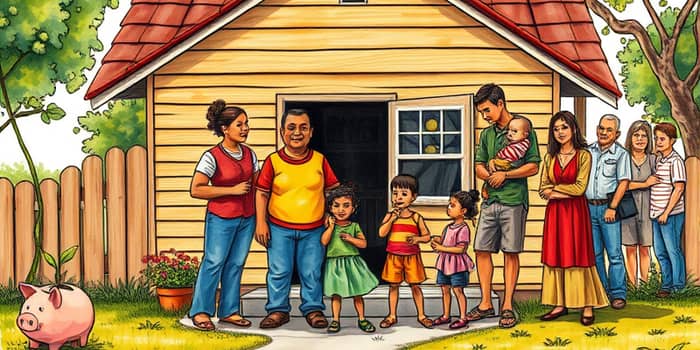
Every year, millions of low- to middle-income families in the United States teeter on the edge of financial collapse. This article traces the emotional and practical journey of one such family—from the brink of crisis to the firm ground of long-term security. Through real data and heartfelt narrative, we’ll explore the triggers of hardship, the day-to-day struggles of scarcity, and the strategies that fuel recovery.
In 2024, nearly 44% of families would slip into crisis if their main income vanished overnight. For Emily and Carlos Reyes, both in their early thirties with two young children, the threat became reality when Carlos’s factory closed due to supply chain disruptions. Rent, utilities, and medical bills loomed large as inflation had already driven up everyday expenses by an average of $3,500 more per year for similar households.
Suddenly, what once felt like a modest monthly budget couldn’t stretch to cover groceries and transportation. Their savings, barely touching four digits, evaporated in weeks. They found themselves among the 56% of U.S. adults facing inability to cover $1,000 emergencies, and without a clear path forward.
For the Reyes family, each day brought new reminders of vulnerability. By mid-month, their SNAP benefits ran out, forcing them to ration meals and skip fresh produce. Their two children, ages 6 and 8, began to feel the stress—reports show that food insecurity negatively impacts school performance and health. Emily often lay awake at night, wondering how to keep their landlord from evicting them.
This downward spiral is familiar to many: 36.4% of Americans in April 2024 had significant difficulty paying household expenses, and 43.3% of 25–39-year-olds reported acute financial strain. As the Reyes family’s story illustrates, a single shock can cascade into prolonged instability.
To stave off eviction, Emily took a part-time job delivering groceries while Carlos relied on informal loans from relatives. They joined a local church pantry and enrolled in a financial literacy workshop. These actions mirror common coping strategies: audit expenses, cut nonessential spending, and seek both formal and informal aid.
Studies reveal that families using a mix of these tools reduce their reliance on high-interest debt. The Reyes household learned quickly how to stretch every dollar—combining coupons, bulk shopping, and energy-saving habits to trim costs.
As months passed, small victories added up. The couple built an emergency fund, reaching $1,000 for the first time in years. They reflected the national trend: 30% of adults increased their savings since 2020, the highest level in recent memory. They also secured term life insurance policies and automated monthly transfers to their new account.
Crucially, the family embraced the whole-family approach for support championed by researchers. By involving grandparents, neighbors, and local educators, they created a network that promoted consistent childcare, job referrals, and emotional encouragement. This collective effort directly contributed to a rise in weekly earnings—mirroring the national increase from $1,059 to $1,117 between 2022 and 2023.
Over two years, the Reyes family transitioned from persistent scarcity to a place where 73% of adults doing okay became their reality. Their journey underscores the interplay of personal initiative and systemic support.
Below is a snapshot of key benchmarks in their transformation, alongside broader trends.
The Reyes family’s path highlights several enduring lessons. First, early financial education is critical: with only 57% national literacy, many households remain unprepared. Second, building even a minimal cushion fosters resilience. Third, building trust within community amplifies every dollar saved and every skill learned. Finally, policy enhancements—like more responsive SNAP disbursements—can soften the steepest cliffs on the journey.
Today, Emily and Carlos reflect on their experience not with regret, but with gratitude. They volunteer at financial workshops and mentor other families, ensuring more people can pivot from vulnerability to strength. Their story shows that with knowledge, planning, and collective effort, a future once dominated by scarcity can transform into lasting stability.
In the words of a community leader, “True security is built one small step at a time.” Emily and Carlos’s journey reminds us that those steps, taken together, build a bridge from crisis to confidence.
References