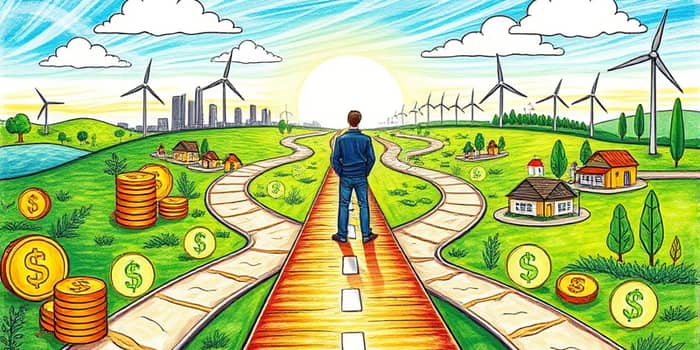
In an age defined by rapid economic shifts, ecological risks, and geopolitical uncertainties, individuals and organizations face unprecedented challenges in safeguarding their financial well-being. Traditional budgeting and forecasting often leave us vulnerable to sudden shocks. By contrast, strategic foresight for financial planning empowers stakeholders to anticipate change, adapt proactively, and build long-term resilience against disruptions. This comprehensive approach aligns everyday decisions with visions of sustainability, intergenerational equity, and anti-fragility.
Financial foresight does not attempt to predict a single future. Instead, it explores a range of possible outcomes to inform strategic choices today, ensuring that portfolios, projects, or personal budgets withstand the unknowns ahead.
At its heart, strategic foresight uses structured methodologies—scenario planning, trend analysis, and roadmapping—to map out plausible, probable, and preferable futures. When applied to finance, it becomes a powerful framework for proactive resource allocation.
Two distinct yet complementary ideas emerge:
Where traditional forecasting aims to extend past trends, financial foresight challenges assumptions, inviting innovators to stress-test portfolios against climate shocks, supply chain disruptions, and currency volatility.
Conventional financial models often prioritize short-term returns, global supply chains, and high leverage. While profitable under stable conditions, these systems can crumble when faced with unexpected crises. Financial foresight, in contrast, emphasizes local resilience, diversified assets, and minimal debt for sustainable infrastructure.
Implementing financial foresight involves three interactive phases:
These techniques mesh scenario planning, trend analysis, and roadmapping into a cohesive practice. By stress-testing financial decisions against multiple futures, stakeholders can identify vulnerabilities and spot hidden opportunities.
Whether you manage personal savings or corporate capital, financial foresight offers concrete tactics for lasting security:
Chief Financial Officers can extend traditional FP&A roles by integrating scenario analysis into capital planning, turning uncertainty into a competitive edge. Personal investors can set aside contingency reserves and adjust asset allocations based on plausible climate or policy shifts.
To translate foresight into daily action, consider this adapted checklist:
By iterating on these steps, individuals and organizations can ensure agility and avoid the pitfalls of static plans.
Numerous frameworks and platforms support strategic foresight. The Institute for the Future’s Foresight Essentials offers methods for signals analysis and innovation pattern mapping. Government agencies like the OECD leverage scenario planning for policy resilience. Finance-specific tools enable CFOs to run stress tests against currency fluctuations and supply chain disruptions.
However, challenges persist. Overly rigid scenarios can curb creativity, while conflating forecasting with foresight risks tunnel vision. The deluge of digital data demands disciplined filtering to prevent analysis paralysis. Moreover, academic research often emphasizes theory over quantified outcomes, leaving a gap in benchmarks like ROI under climate stress scenarios.
Financial foresight transforms uncertainty into a catalyst for growth and security. By aligning present-day decisions with a spectrum of possible futures, stakeholders build portfolios and budgets that thrive amid volatility. This approach demands ongoing vigilance, interdisciplinary collaboration, and a willingness to challenge entrenched assumptions.
Ultimately, investing in future-proof financial strategies is not just about risk avoidance—it’s about harnessing change to create enduring value for ourselves, our communities, and generations to come. As we navigate the unknown terrain ahead, financial foresight offers both a compass and a map, guiding us toward stability, resilience, and sustainable prosperity.
References