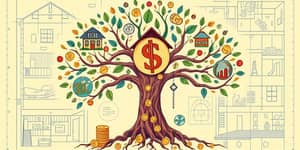
Imagine moving from day-to-day survival to confidently shaping your future. Economic empowerment is the path that takes you from financial uncertainty to sustainable stability. This journey equips you with the knowledge and resources to make informed choices, gain control over your own finances, and create opportunities beyond mere subsistence. Throughout this guide, you will discover practical strategies, inspiring case studies, and actionable steps to transform your relationship with money and community resources.
Every journey begins with a clear assessment of where you stand today. Understanding your starting point involves evaluating your current financial habits, skill sets, and access to resources. Are you managing irregular income or struggling with credit challenges? Reflect on the barriers that limit your progress, such as lack of access to banking or limited market connections. By confronting these realities, you lay the foundation for targeted growth.
At the core of economic empowerment are three fundamental dimensions: economic agency, skills development, and social capital. Economic agency refers to the ability to make autonomous decisions about how you use and grow your resources. Skills development encompasses both financial literacy and vocational training, ensuring you have the tools to pursue diverse income streams. Social capital involves the networks and relationships that open doors to new market opportunities and support.
To structure your path forward, focus on these three essential pillars. Each one plays a critical role in creating a robust framework for lasting transformation. When combined, they create a break free from financial uncertainty that anchors long-term stability and growth.
As you engage with each building block, remember that practical application is key. Seek out local programs, online courses, or peer-led workshops that offer guided support. Over time, your confidence will grow alongside your skills, empowering you to take bold financial steps.
Implementing strategic tools and approaches accelerates your progress. Whether you are starting a small business or managing household expenses, these resources can help leverage community networks for support and tackle complex financial challenges.
By combining these strategies, you can build a resilient financial ecosystem around you. Start with one tool at a time, master its use, and then layer in additional resources to expand your capabilities further.
Stories from around the world show how economic empowerment fosters dignity and independence. For instance, a rural woman receiving a micro-loan used it to buy a second-hand sewing machine. Within months, she doubled her income, reinvested in materials, and build lasting security for your future by hiring an apprentice. Her success inspired neighbors to form a local cooperative, collectively purchasing supplies at lower prices and sharing profits.
In another example, fair trade coffee cooperatives enabled farmers to negotiate prices directly with international buyers. This removed exploitative middlemen and ensured families received a stable wage to invest in education and healthcare. Similarly, the Tanzania Social Action Fund program allocated grants to women exclusively, which not only increased household incomes but also reduced domestic violence and elevated women’s decision-making roles.
When survivors of human trafficking participate in tailored empowerment initiatives, they gain access to counseling, vocational training, and personal identification documents. The combination of emotional support and practical skills equips them to reengage with the economy on their own terms, illustrating how holistic approaches can restore hope and autonomy.
No journey is without obstacles. You may face structural barriers like discriminatory lending practices or ingrained social norms that limit participation. To navigate these hurdles, advocate for inclusive policies, join networks that amplify marginalized voices, and seek allies in local governance. Change often starts at the local level, where informed citizens can influence budgeting decisions and resource allocation.
Additionally, embrace sustainability by adopting climate-smart practices in your ventures. Whether through eco-friendly supply chains or resource-conservation methods, aligning your financial goals with ecological resilience ensures long-term viability. Cultivating challenge systemic barriers with collective action fosters community-wide transformation that benefits future generations.
Now is the moment to translate insight into action. Commit to continuous learning, reach out for mentorship, and experiment with small-scale projects. Each step you take builds momentum, weaving together expertise, resources, and community support into a powerful narrative of self-determination.
By taking these initiatives, you can transform the lives of those around you and contribute to a ripple effect of prosperity that extends beyond your immediate circle.
Your journey to financial control is not a straight line but an evolving path marked by learning, challenges, and triumphs. Economic empowerment transcends the individual—it uplifts families, communities, and entire economies. When you embrace autonomy over your resources, advocate for equitable systems, and persistently seek knowledge, you set in motion a domino effect of positive change. May this guide serve as a compass, helping you navigate toward lasting independence, freedom, and dignity.
References