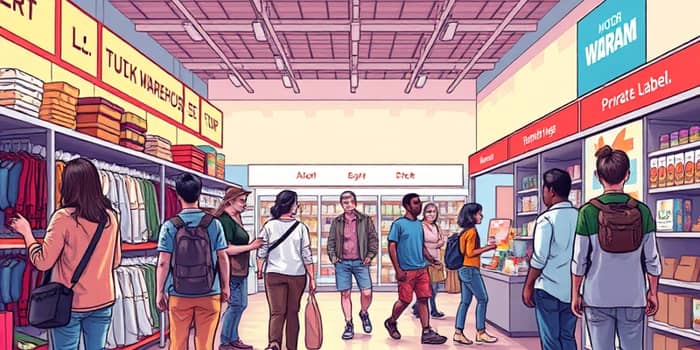
In an era of rising prices and uncertain economic tides, consumers and retailers alike are redefining what it means to find value. Gone are the days when bargain hunting meant scouring dusty discount racks. Today’s savvy shopper balances quality, convenience, and cost in creative ways—and retailers are rising to meet this demand.
From private labels to second-hand markets, the modern value revolution is reshaping every corner of commerce. Let’s explore how you can benefit from these innovations and make every purchase a smart investment.
Inflation, tariffs, and a widening income gap have fueled a bifurcated economy. While affluent households continue to spend on luxury and experiences, many consumers feel the pinch. In 2025, 47% of shoppers cited personal finances as their top concern, and 38% remained worried about inflation.
Despite an overall 4.1% growth in holiday retail sales, traditional discount department stores saw revenue decline at a CAGR of 1.2%, falling to $110.3 billion by 2023. Meanwhile, private label sales are projected to reach $277 billion by the end of 2025—evidence that value often means quality at a lower price point.
Even amid these pressures, physical stores retain strength: 80% of shopping still happens in brick-and-mortar locations, a figure only expected to dip to 76% by 2030. This resilience underscores the importance of omnichannel experiences and in-store innovation.
Shoppers are more strategic than ever. They embrace bulk buying, thrift shopping, and selective splurges—often in the same shopping trip. Below is a breakdown of generational behaviors guiding this shift:
Across all ages, trend fatigue and doom spending have emerged as defining behaviors. Young shoppers may impulse-buy small treats rather than large items, while older consumers stock up on essentials in bulk, absorbing fee increases and membership costs without hesitation.
To thrive, retailers are adopting strategies that go beyond markdowns and coupon clipping. Key approaches include:
Major players like Costco, TJX Companies, and Aldi are expanding rapidly, while mid-tier names such as Target and Kohl’s reassess their positioning. Mall operators, too, are reimagining spaces with mixed-use concepts, salon adjacencies, and pop-up experiences to lengthen dwell times.
Despite bright spots, challenges loom. Inventory costs rose 3% year-over-year for PVH Corp., partly driven by tariffs. With an estimated 55% of future tariff impacts borne by consumers, price sensitivity remains high.
Additionally, 569 store closures in 2025 contrast with 1,118 openings—an encouraging net gain but signaling that retailers must remain agile. AI-driven supply chain optimization can help manage costs and mitigate disruptions, while carefully curated tenant mixes prevent overexposure to underperforming categories.
Looking forward, the retail landscape will reward those who combine strong assets—robust logistics, engaging stores, and differentiated e-commerce—with a deep understanding of consumer values. Shoppers will continue to demand both affordability and experience, and retailers prepared to offer seamless, value-driven journeys will emerge as long-term winners.
By adopting these practices, consumers can maximize their spending power and find lasting satisfaction in every purchase.
Ultimately, value shopping today transcends the bargain bin. It’s about informed choices, creative channels, and a spirit of exploration. Whether you’re a budget-conscious student, a busy parent, or a luxury seeker, there’s a strategy to help you unlock greater value—one purchase at a time.
References